Testudo graeca
Linnaeus, 1758
Greek Tortoise, Common Tortoise, Mediterranean Spur-thighed Tortoise, Moorish Tortoise, Spur-thighed Tortoise

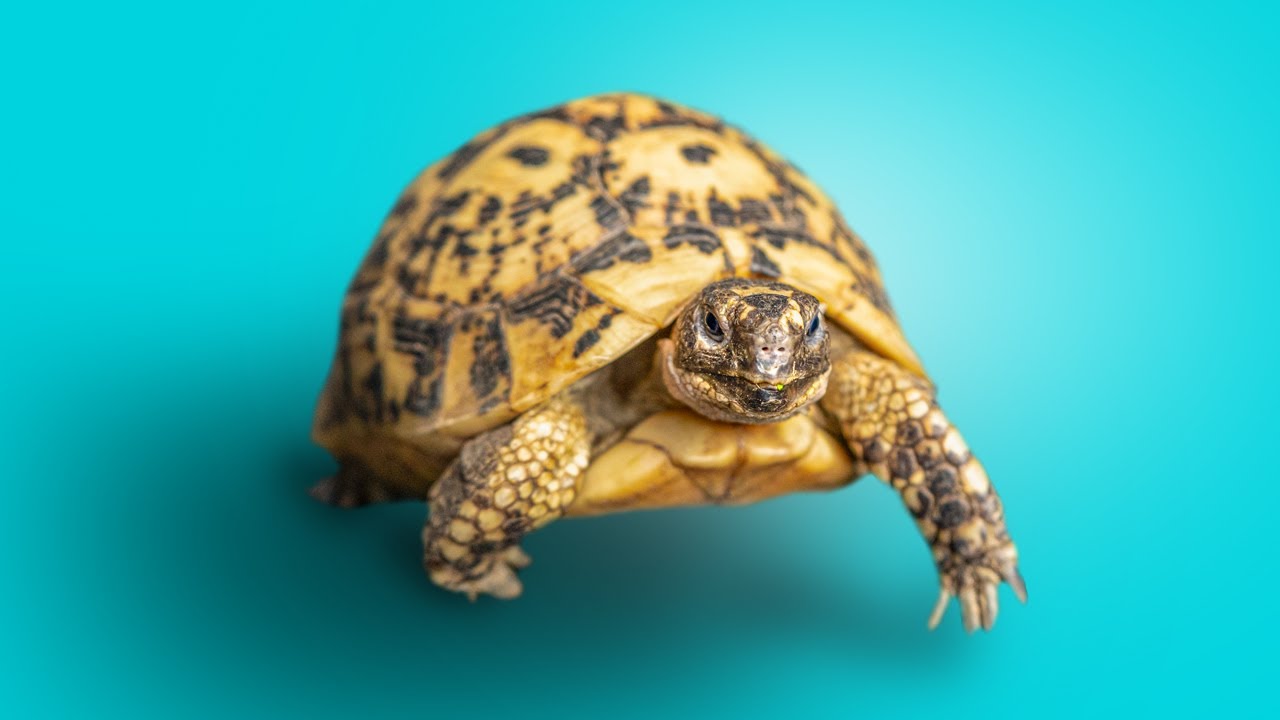
The Greek tortoise, also known commonly as the Moorish tortoise and the spur-thighed tortoise, is a species of tortoise in the family Testudinidae. The species is a medium-sized herbivorous testudinid, widely distributed in the Mediterranean region.
Climate
Where this species lives (Köppen-Geiger zones):
Other zones, each under 10%: 20%
Estimate for Csa: needs review · native range not checked.
Compare with where you live
Coming soon: indoor and enclosure scores
For an animal kept indoors, you’ll set your room’s temperature range for each month. Then you’ll either add its humidity or let us use your outdoor humidity. For an enclosure, you’ll enter its average temperature and humidity for each month.
The higher a species scores outdoors where you live, the easier its indoor room or enclosure will be to keep well. A low score means much more work and closer watching. A red-footed tortoise in Phoenix can’t rely on local humidity, so its keeper has to keep the enclosure humid and watch it closely. A red-footed tortoise in Miami may be able to live outdoors with little added humidity.
Captive-bred availability
Commonly captive-bred
Reviewed by a curatorCaptive-bred animals of this species are easy to find in the hobby.
Many U.S. breeders keep colonies of several subspecies (Ibera, golden, Libyan, Caspian); hatchlings listed by dealers most of the year.
Sign in Sign in to say how often you see this species captive-bred.
Diet
Not reviewed yet. We haven’t checked a diet for this species.
Research
- Global Testudo Trade: Update and Recent Trends (Open the original)
Shearer, Iona; Türkozan, Oğuz, Jan 6, 2025, Chelonian Conservation and Biology, Conservation
Videos

What’s been reported
- Heaviest on record (not an average)
- 4.98 kg
- Longest shell (straight carapace)
- 18.5 cm
- Longest life in this dataset
- 116 years
- Hatchling or newborn mass
- 14 g
- Clutch or litter size
- 4–21
- Clutches or litters per year
- 1
- Lives
- on the ground
- Habitat
- desert, shrubland
- Active
- by day
- Diet
- eats mostly plants
- Sex is set by
- egg temperature
Values gathered from the scientific literature, which can be incomplete or out of date: animals in human care may live longer or grow larger than what’s listed. This isn’t care advice. Selected from ReptTraits v1-2 (Oskyrko et al. 2024), values rounded · CC BY 4.0
Contains 11 subspecies
- Testudo graeca armeniacaChkhikvadze & Bakradse, 1991Araxes TortoiseSubspecies
- Testudo graeca buxtoniBoulenger, 1921Buxton's TortoiseSubspecies
- Testudo graeca cyrenaicaPieh & Perälä, 2002Cyrenaican Spur-thighed TortoiseSubspecies
- Testudo graeca graecaLinnaeus, 1758Mediterranean Spur-thighed TortoiseSubspecies
- Testudo graeca iberaPallas, 1814Asia Minor TortoiseSubspecies
- Testudo graeca marokkensisPieh & Perälä, 2004Morocco TortoiseSubspecies
- Testudo graeca nabeulensisHighfield, 1990Nabeul TortoiseSubspecies
- Testudo graeca terrestrisForskål, 1775Mesopotamian TortoiseSubspecies
- Testudo graeca tripolitaniaPoterala, Rattay, Johnson, Buijlayyil, Kiraz & Ajaj, 2024Subspecies
- Testudo graeca whiteiBennett ex White, 1836Mediterranean Spur-thighed TortoiseSubspecies
- Testudo graeca zarudnyiNikolsky, 1896Iranian TortoiseSubspecies